
The Negotiated date SLA type allows you to track SLA performance based on a specific date or date-time field in the work item.
Instead of measuring a fixed duration (for example, 8 hours), this SLA type tracks whether the work item is completed before or after a defined deadline.
This deadline is taken from the work item field, such as: Due Date, or any custom date or date-time field.
👉 This means that each issue can have its own SLA target.
This type of SLA is typically used when:
-
each task has an individually agreed deadline
-
deadlines are defined manually or negotiated with stakeholders
-
you want to include those deadlines in SLA tracking and reporting
How SLA time is calculated
Once the defined Start condition is met, the SLA timer begins.
Instead of counting toward a fixed duration, the system calculates the remaining time until the selected date field.
-
SLA starts → when the Start condition is met
-
SLA target → the date set in the selected field
-
SLA stops → when the Stop condition is met
If the wotk item is completed before the selected date, the SLA is met.
If the work item is completed after the selected date, the SLA is exceeded.
The system takes into account the configured working schedule and excludes non-working hours from the calculation.
SLA conditions and goals
In a Negotiated date SLA, conditions and goals still work together:
-
Conditions define when SLA tracking starts and stops
-
Goal is defined by the selected date field
Example
:Start: Start condition: work item moves to Status: To Do
:Stop: Stop condition: work item moves to Done
-
Negotiated date field: Due Date = 9:00 AM
💡 If the work item enters To Do at 10:00 AM on March 10, the app tracks whether it is completed before or after 9:00 AM on March 11.
-
Completed at 8:00 AM → SLA is met
-
Completed at 9:30 AM → SLA is exceeded
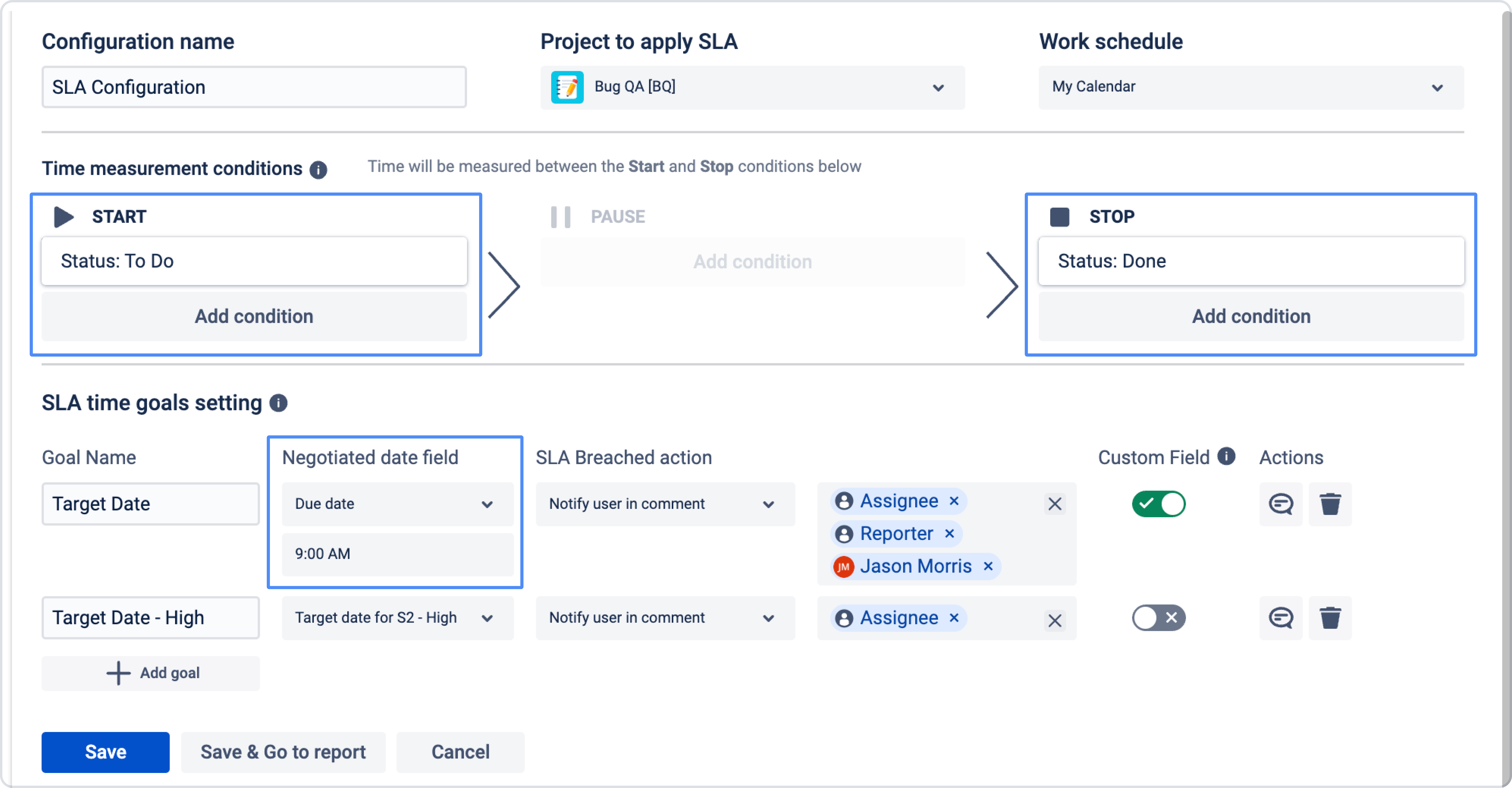
The system checks whether the work item is completed before or after the selected date.
SLA conditions configuration
You can configure:
:Start: Start condition
Defines when SLA tracking begins. The timer starts when the work item meets the selected condition (for example, when the status changes to In Progress).
:Stop: Stop condition
Defines when SLA tracking ends. The timer stops when the work item meets the selected stop condition (for example, when the status changes to Done).
The following options are not available for Negotiated date SLA:
-
Pause condition
-
SLA Reset
-
Multi-cycle option
This is because the SLA is based on a fixed deadline, not on accumulated time.
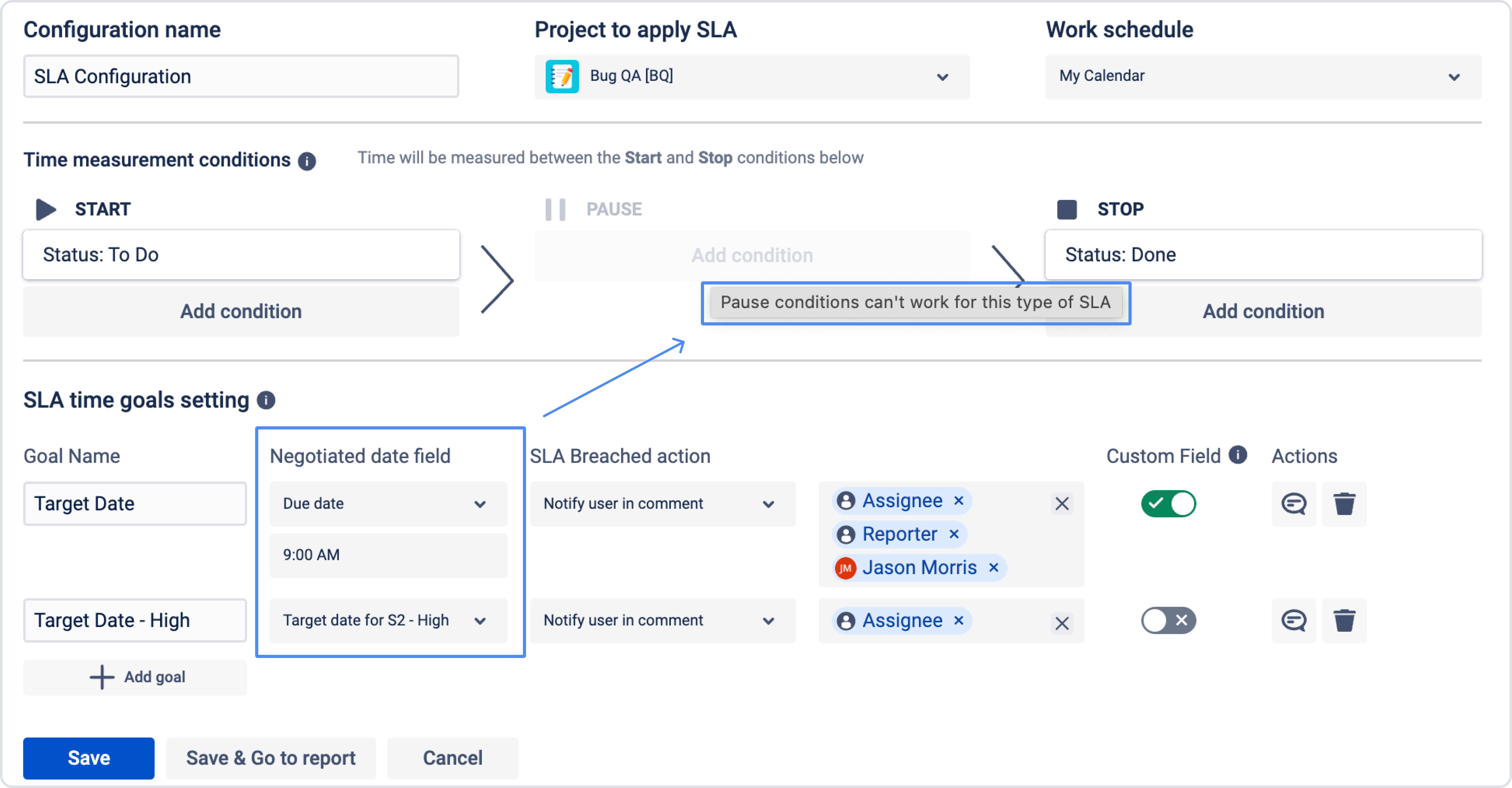
SLA goals configuration
For this SLA type, you do not define a fixed time-based goal, such as 8h. Instead, you select a Negotiated date field, and the value from that field becomes the SLA target for each work item.
For example, you can use:
-
Due Date
-
Target Date
-
any other custom date or date-time field
This means that each work item can have its own individual SLA deadline, depending on the date set in the selected field. This approach is useful when deadlines are set individually and should be tracked as SLA targets.
.jpg?cb=68ac5f19cc982eb21f7f6cb6bd2b324a)
Automated actions
You can configure automated actions that are triggered when the SLA is exceeded. These actions help teams react when deadlines are missed.
Available actions include:
-
notify user in comment
-
change assignee
-
change priority
-
change status
-
notify via Slack
.jpg?cb=0fac14131530f5cfff6a67c15c085586)
Working time
SLA calculation is based on the selected Work schedule.
-
Non-working hours (weekends, holidays) are excluded
-
The remaining time is calculated according to working hours
For example, if the Due Date is 5:00 PM and your working hours end at 6:00 PM, only the working time within that range will be counted.
How to configure a Negotiated date SLA
To create and configure this SLA type:
-
Open the SLA configuration page

-
Click Add new

-
Select Negotiated date
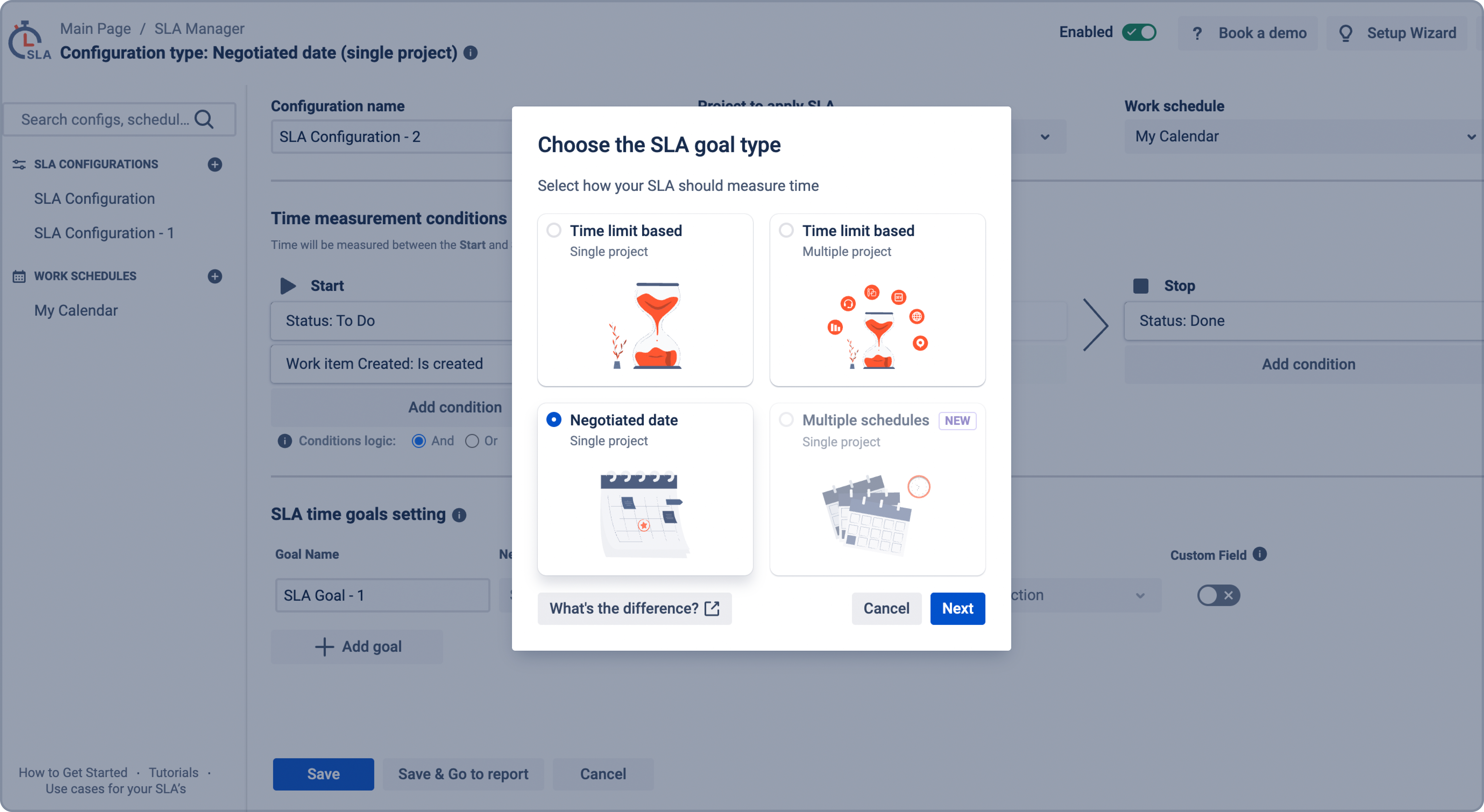
Then configure:
-
Start and Stop conditions
-
Select the Negotiated date field (for example, Due Date or custom field)
-
(Optional) Automated actions and notifications
-
Working schedule
Finally, click .png?cb=845046da4a3270c4104aa0a6e8566d23)
When to use this SLA type
-
each work item has its own deadline
-
deadlines are defined in fields like Due Date
-
SLA targets cannot be defined as a fixed duration
-
you want to track whether tasks are completed before or after those deadlines
Before using this SLA type, make sure that the selected date field is available in your project and properly filled in the work items.
Need help?
Have questions or need help with SLA Time and Report? Contact our support team.
Want to see SLA Time and Report in action?
Book a demo with our team to explore your use case, or start a free trial to try the app in your Jira environment.