
These migration steps can be performed automatically using the Jira Cloud Migration Assistant (JCMA). SLA Time and Report for Jira recommends using this tool to ensure a smooth and reliable migration from Data Center to Cloud.
⚠️ Depending on the size of your instance, migration may take time and could impact system performance. We recommend planning the migration during off-peak hours to minimize disruption.
Make sure to apply all updates and changes before starting the migration.
Any data added or modified in Jira Data Center after the migration will not be transferred (you will need to migrate them again), so we recommend to complete all updates in advance.
.png?cb=797ca878f8d011237ba6d4fa8f1cf718)
Before you start
Make sure your environment is properly prepared.
-
Jira Cloud Migration Assistant must be installed
Ensure that Jira Cloud Migration Assistant (JCMA) is installed on your Jira Data Center instance.
We also recommend reviewing Atlassian’s official migration guidelines before starting
-
Jira Cloud site must be set up and licensed
Make sure you have an active Jira Cloud instance with a valid license. -
Administrator access is required
The migration must be performed by a user with administrator permissions on both the Data Center and Cloud instances. -
SLA Time and Report for Jira is installed and has an active subscription on both instances.
-
Jira Data Center (source)
-
Jira Cloud (destination)
-
Migration will not work if the SLA Time and Report for Jira app is not installed on the Cloud site.
Troubleshooting Installation Issues
If the Jira Cloud Migration Assistant cannot be installed or does not appear in your app list, please contact Atlassian Support for assistance: https://support.atlassian.com/contact/#/
PART 1 - Starting Migration in Jira Data Center
All steps below are performed on your Jira Data Center instance
Phase 1 - Access & Setup
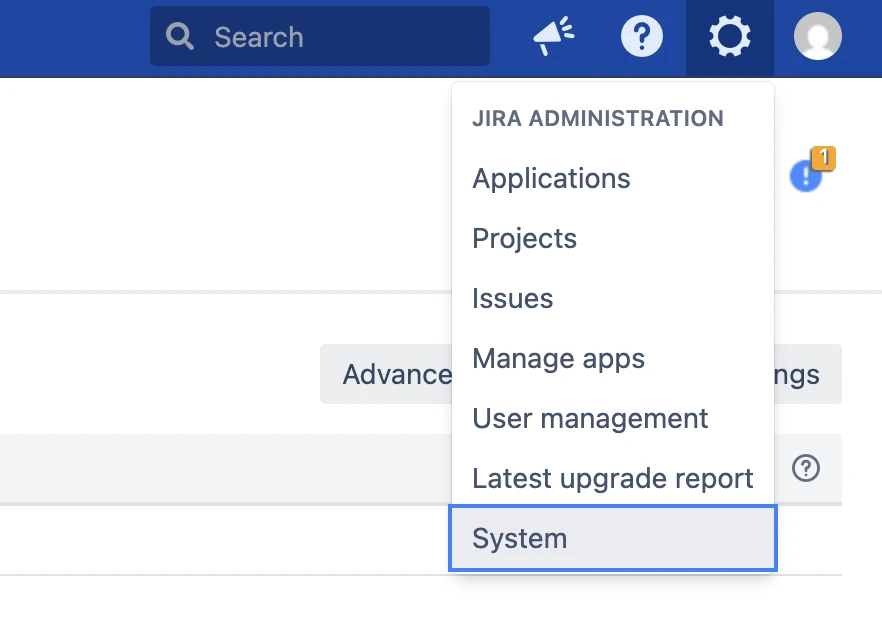
Step 1: Open System settings
[1.1] Click ⚙️ Settings in the top-right corner
[1.2] Select System
Step 2: Open “Migrate to cloud”
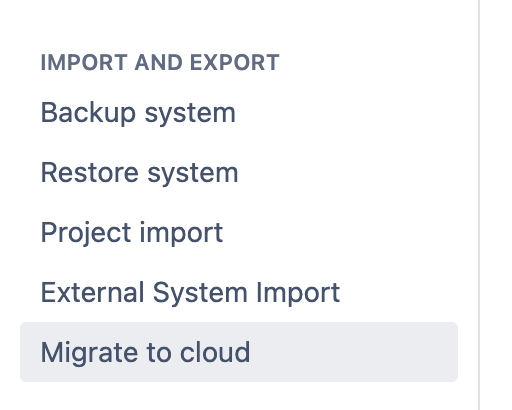
[1.3] Scroll down the left sidebar
[1.4] Find and click “Migrate to cloud”
This will open the Jira Cloud Migration Assistant (JCMA) interface.
After opening JCMA, you will see three main sections:
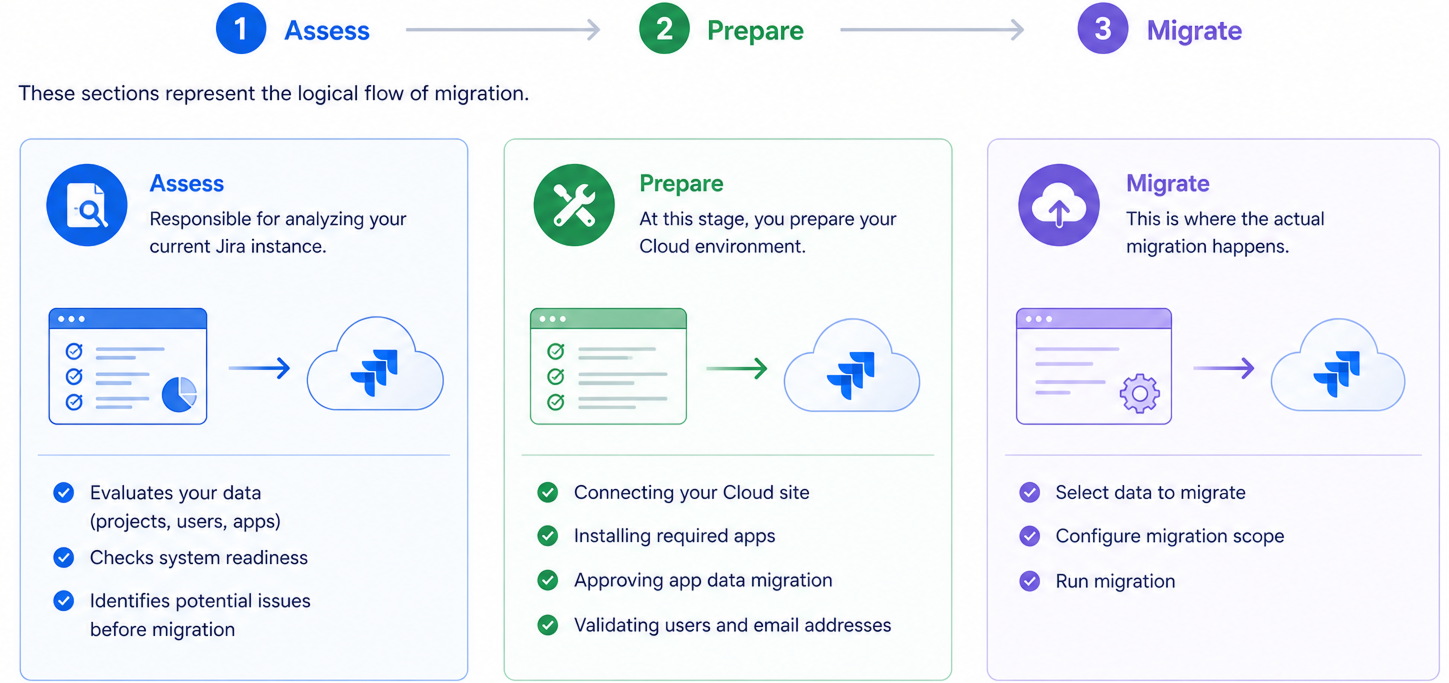
Phase 2 - Assess
Step 2.1 - Run Instance Assessment
[2.1] Run an assessment of the size, performance, and usage of your instance
This step can be run in the background, and once it is completed, you will be able to download a report that contains the results of the analysis of your Data Center instance.
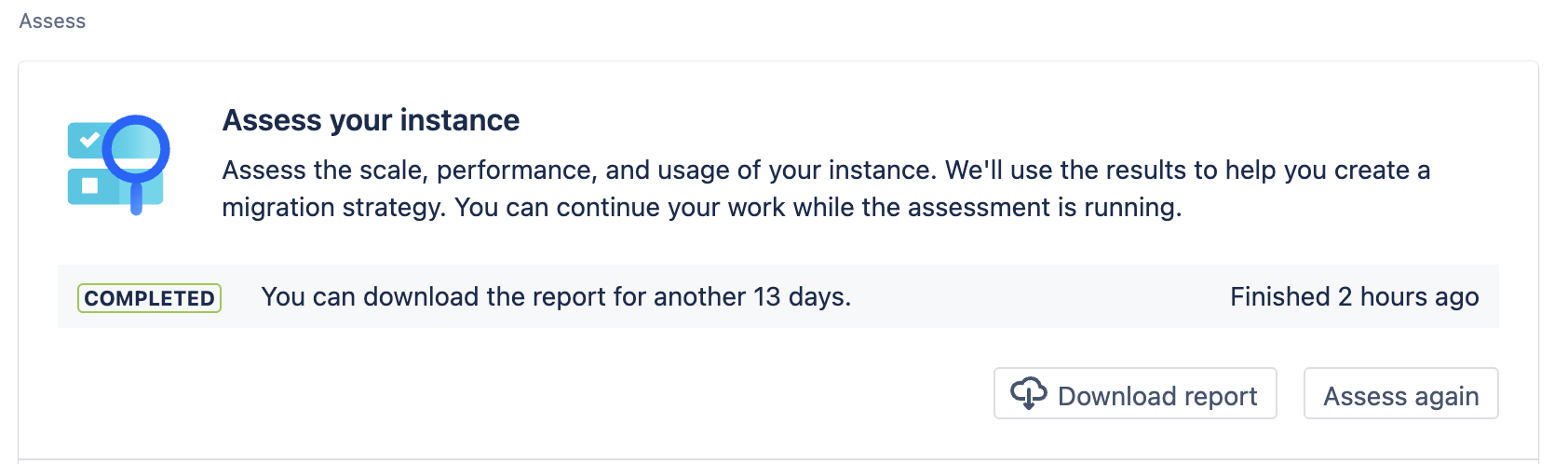
[2.2] Download the assessment report after completion
Assessment and selection of the apps that need to be migrated to the cloud.
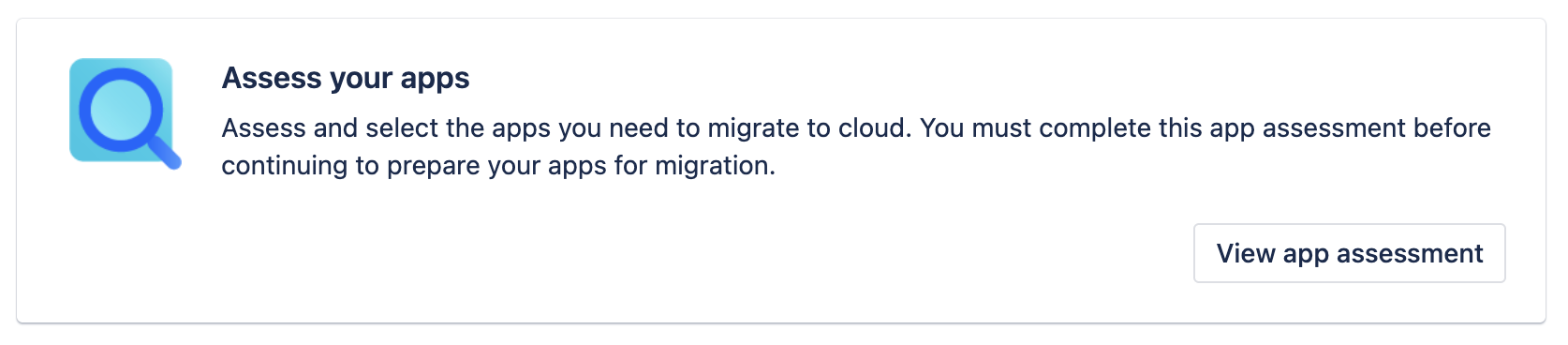
Step 2.2 - Select Apps for Migration
After clicking, you will be redirected to a page with a list of all apps detected in your instance.
[2.3] Find the “SLA Time and Report for Jira” app and select “Needed in cloud”.
[2.4] If there are other apps in this list, you must make a decision for them as well. If you plan to migrate only “SLA Time and Report for Jira”, then select “Not needed in cloud” for all others.
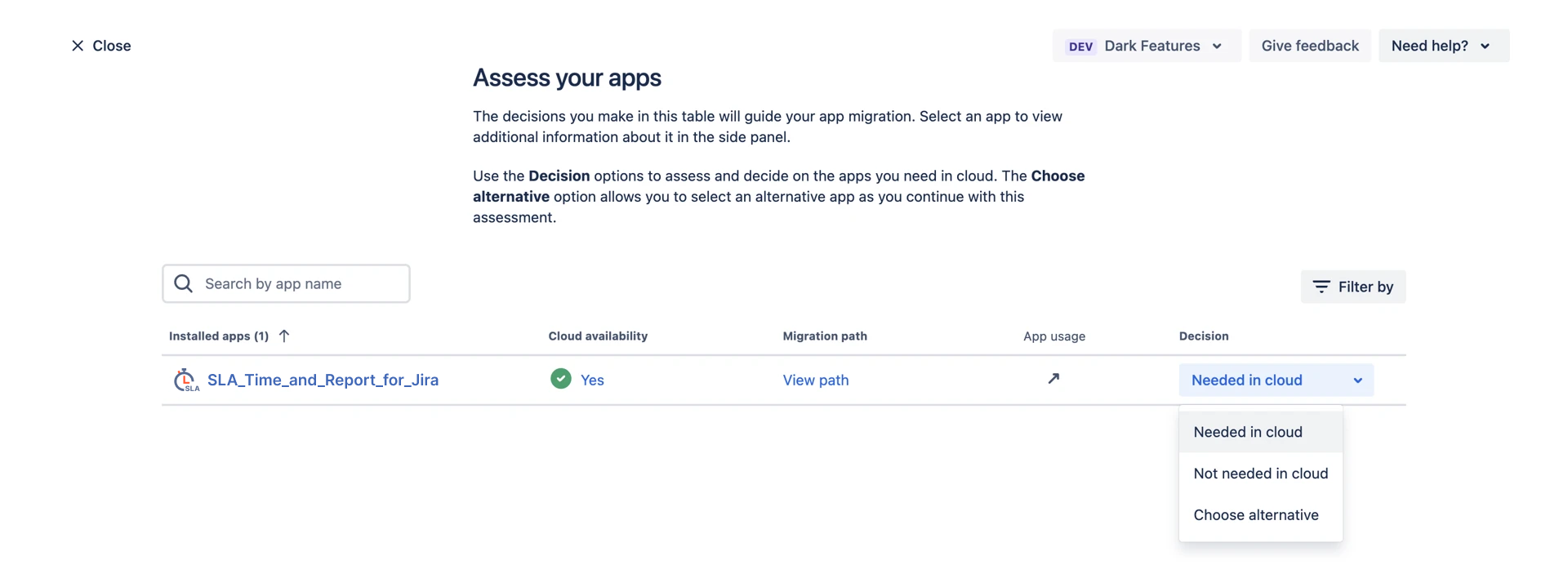
[2.5] Click “Done”

Disabled apps may appear in the list, but migration will not proceed until they are enabled. Ensure all required apps are enabled before continuing.
If the “Needed in cloud” option is inactive, then select “Choose alternative”, click “Next”, and then in the search start typing “SLA Time and Report for Jira” and select our app.
Phase 3 - Prepare
Step 3.1 - Connect to the Cloud site, install your apps, and give consent to migrate app data.
[3.1] Click “Begin preparing”, and you will be redirected to the Cloud connection page.

[3.2] Click “Choose cloud site”.

[3.3] You will be redirected to another page where set:
-
in the “Migrate from” field you specify your Data Center Jira URL
-
in the “Migrate to” field you select your Cloud Jira URL from the dropdown
Only Cloud Jira instances where the current user is an admin will be displayed in this list.
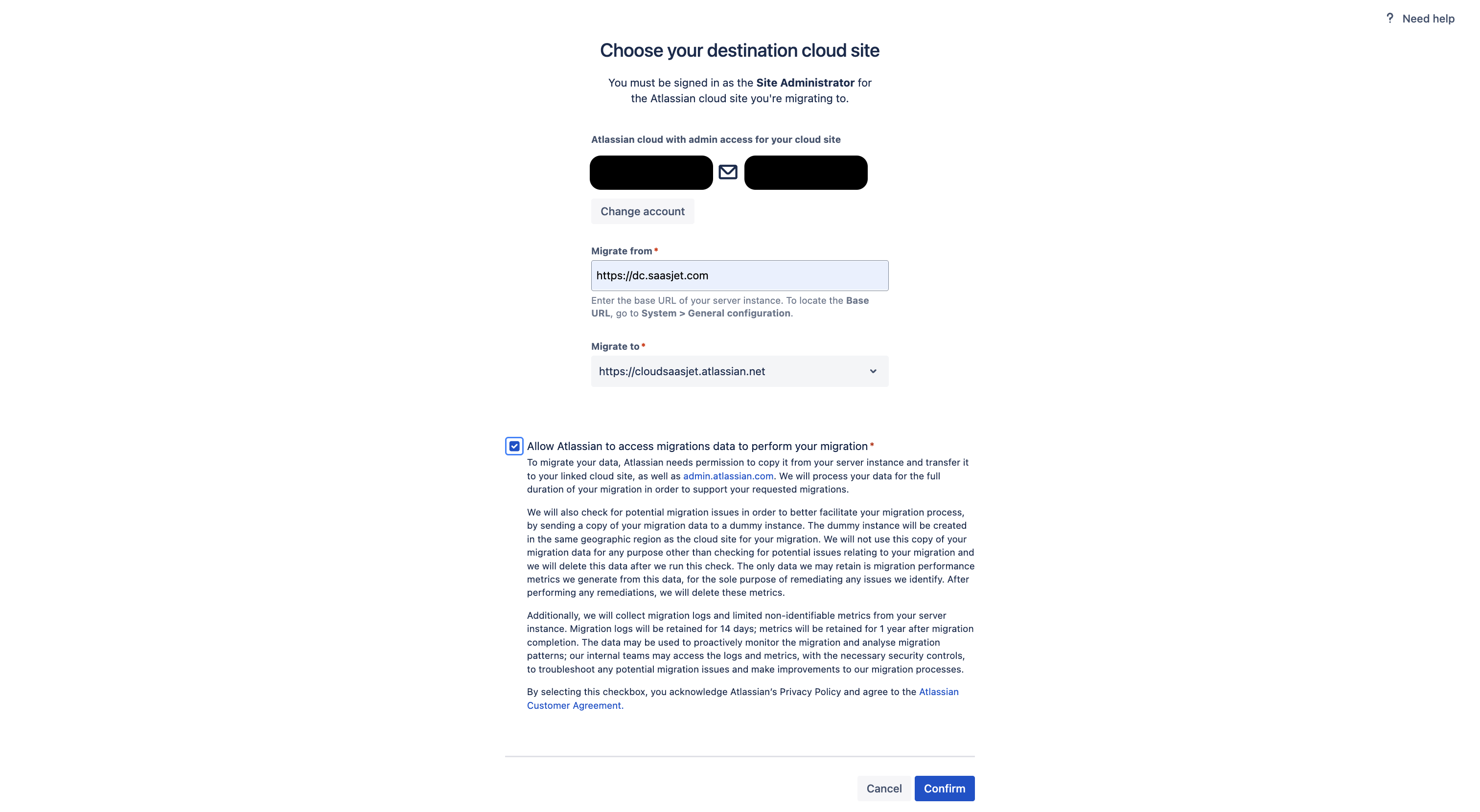
[3.4] Confirm and then click “Continue”.
You will see a list of apps you selected for migration, and it will also show whether these apps are installed on Cloud.
If the app is installed, it will look like this:
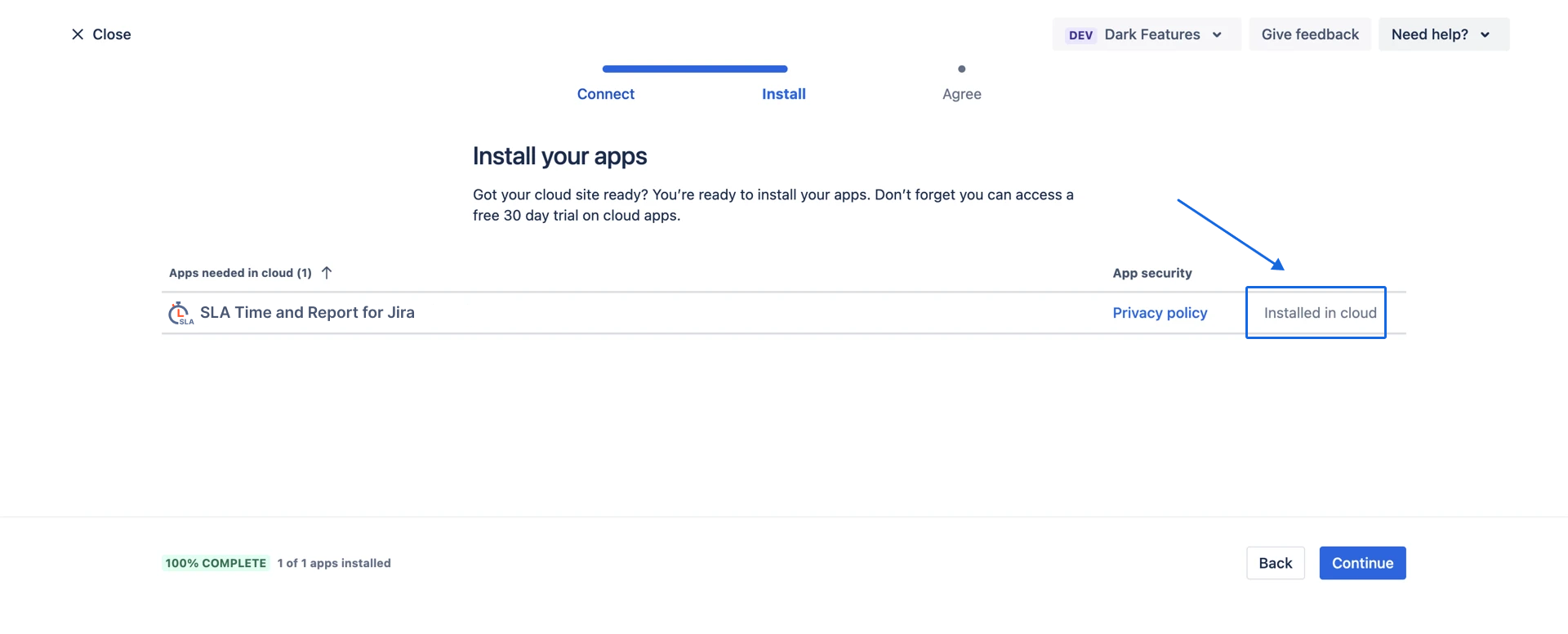
If the app is not installed on the selected Cloud site, you will see this page:
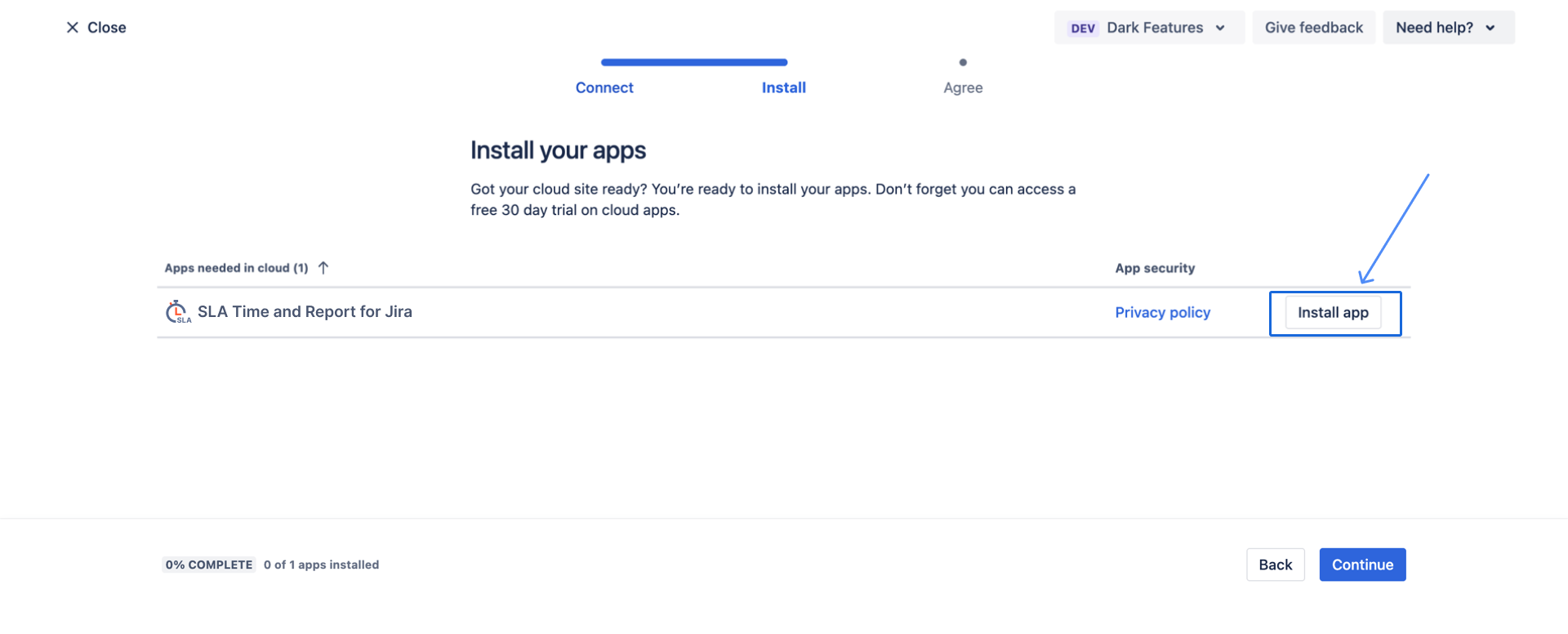
Next, there will be the final step in app preparation, where you need to agree to migrate the data or change your decision:
[3.5] After that, click “View policy” and agree to it.
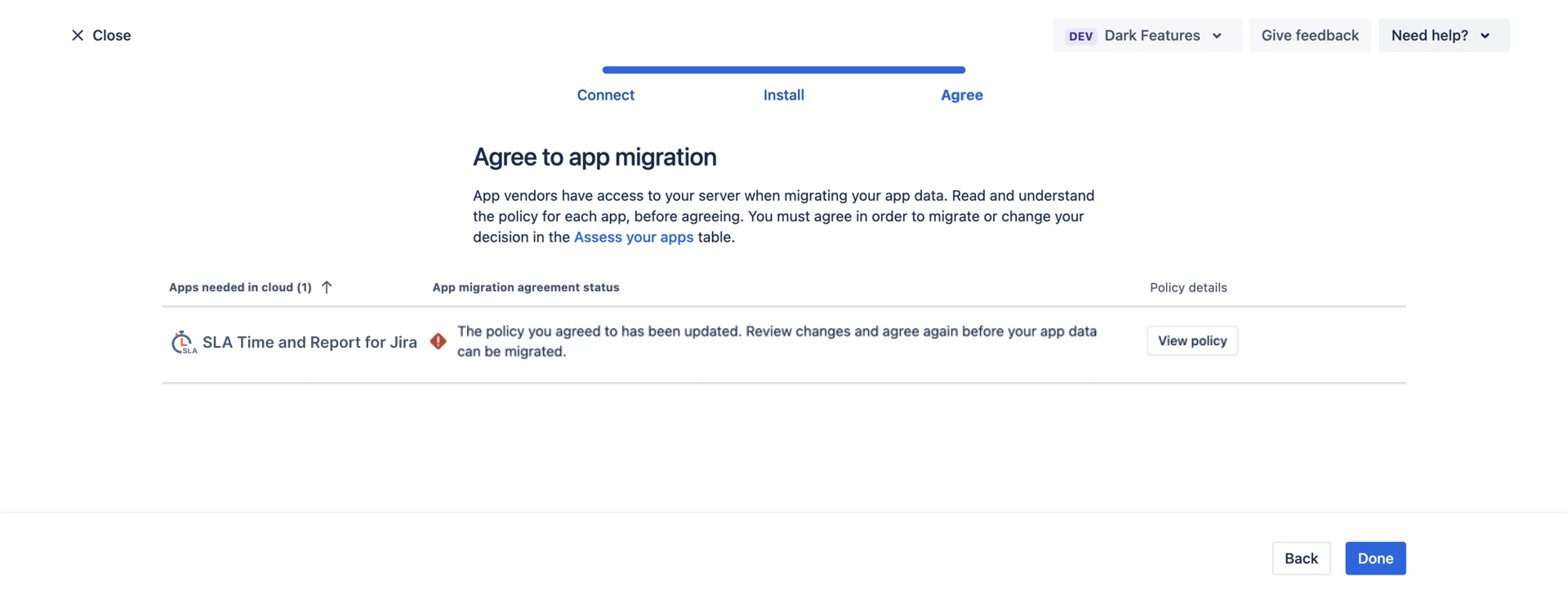
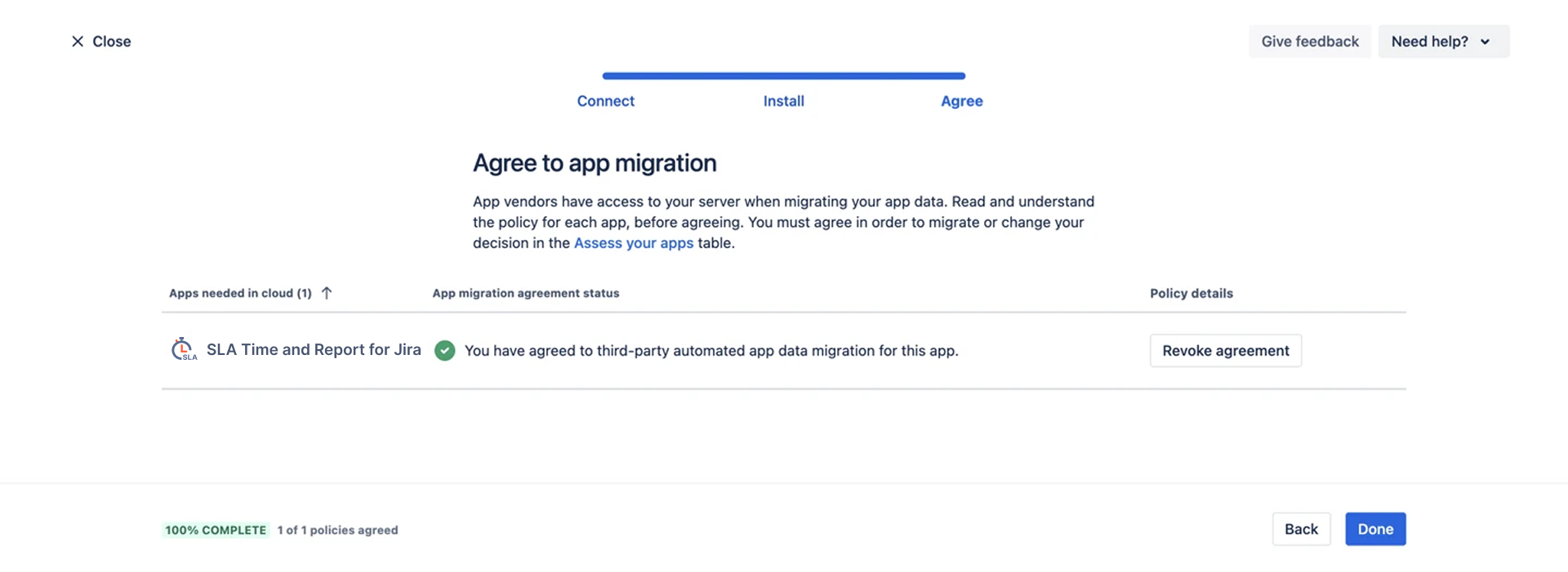
Then you will see the following.
[3.6] Click “Done”
Next, you will proceed to the user readiness assessment, where you need to review users and decide how to handle any invalid accounts.
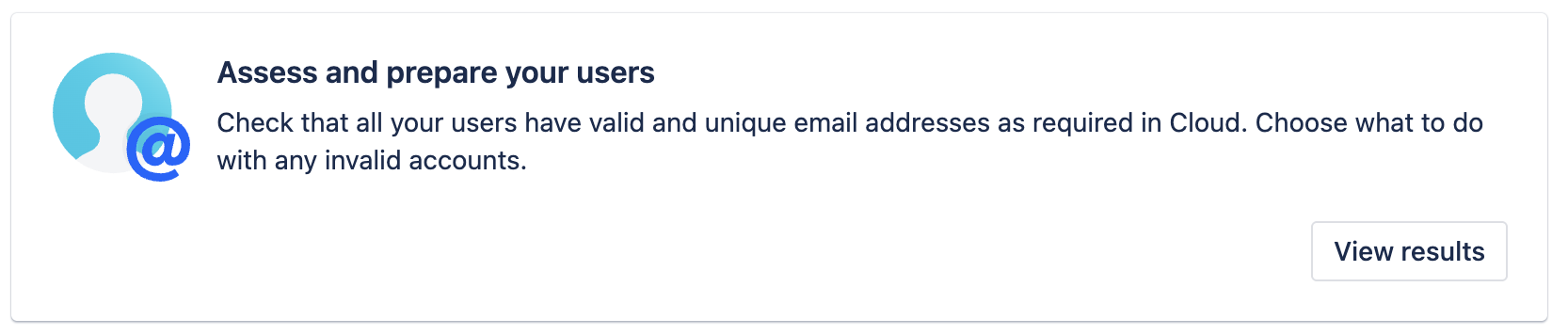
[3.7] Select the Cloud site where users will be migrated:
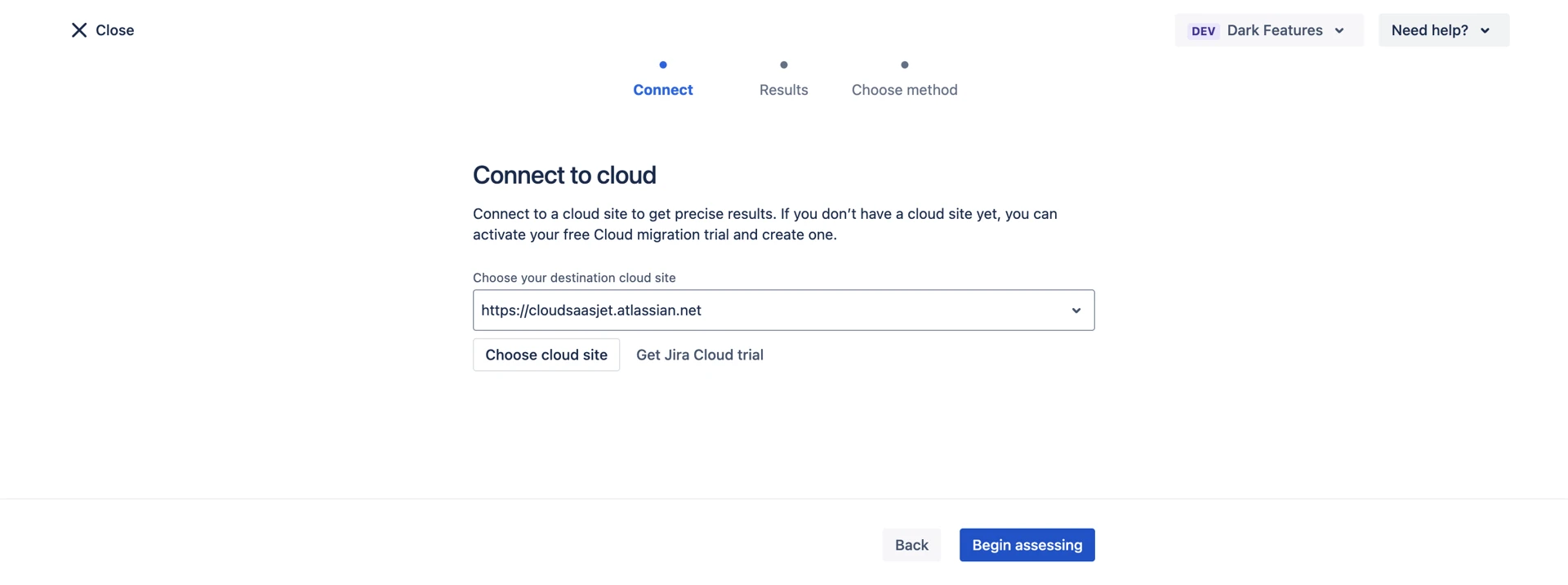
[3.8] Run the check, and if everything is fine, you will see results like this:
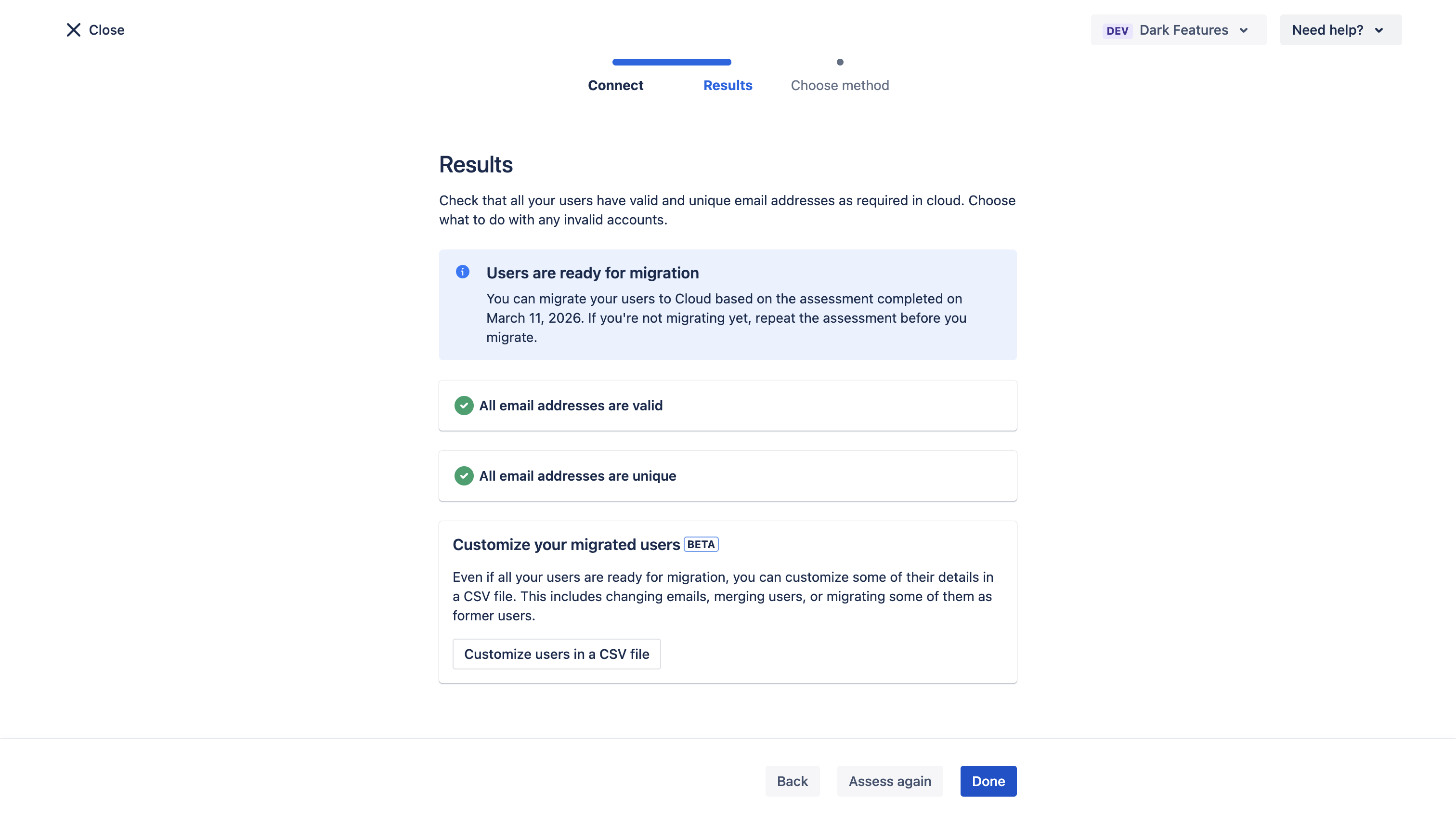
[3.9] Review domains and mark them as:
-
Trusted
-
Not trusted
Here you need to select users based on the email domains you will migrate:
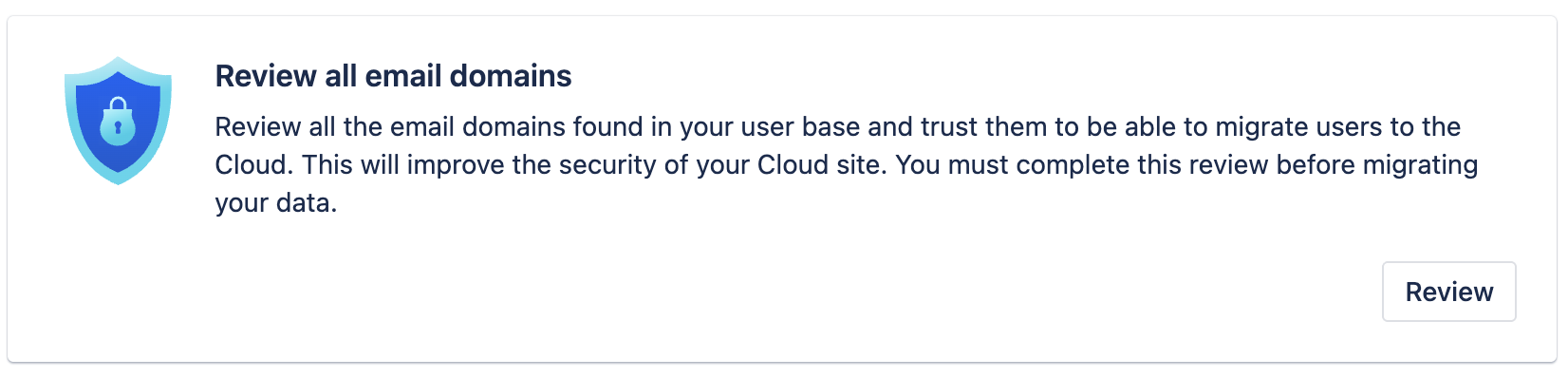
[3.10] Select the Cloud site and run the user assessmen:
.png?cb=6364f95759384a98c50535ba516a1170)
As a result, you will get a list of all domains present in your Data Center instance.
[3.11] You need to decide whether you trust each domain or not:
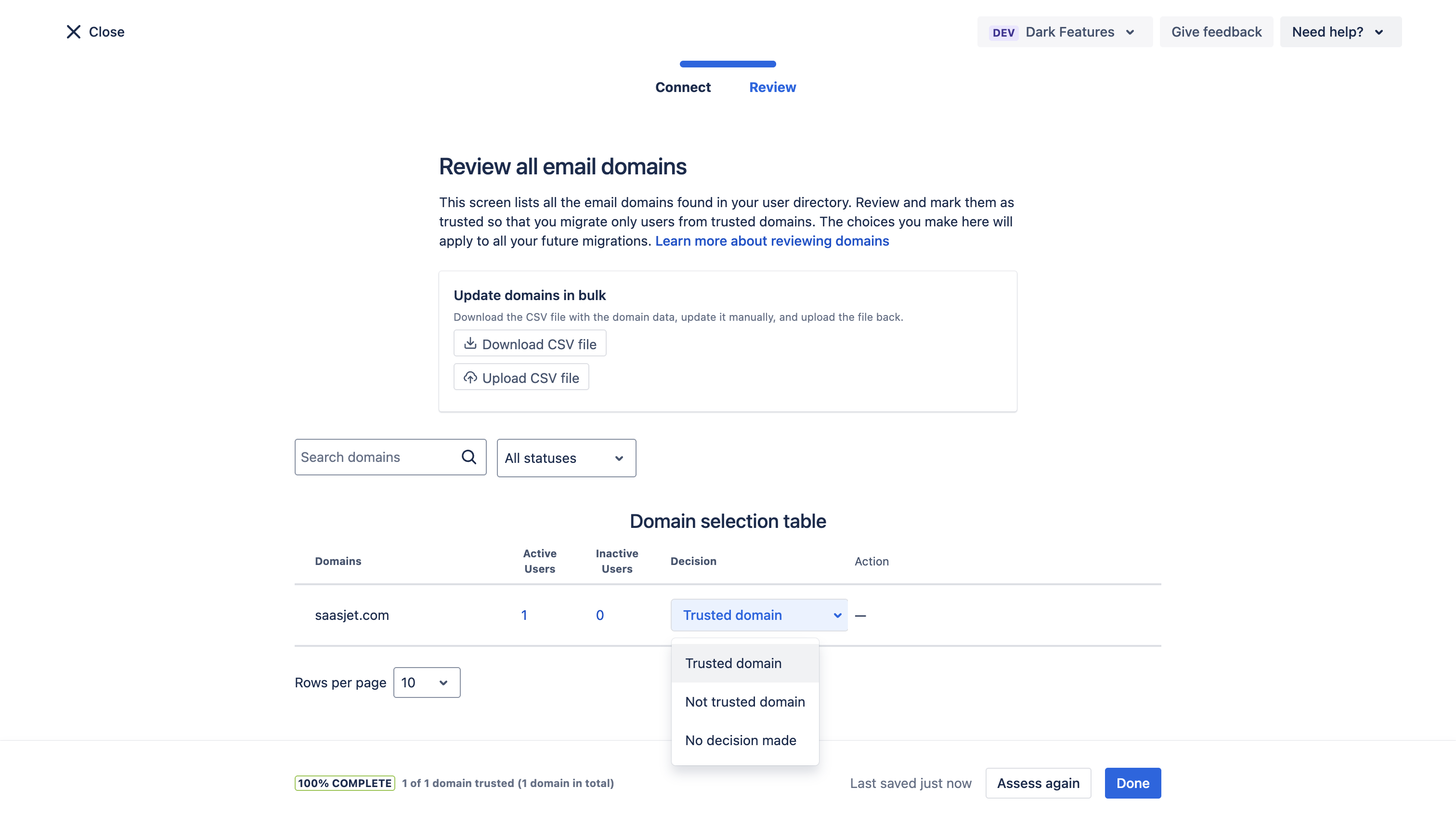
Important!
You must make a decision for each domain, so that the migration can be enabled.
Phase 4 - Migrate
Step 4.1 - Select Migration Type
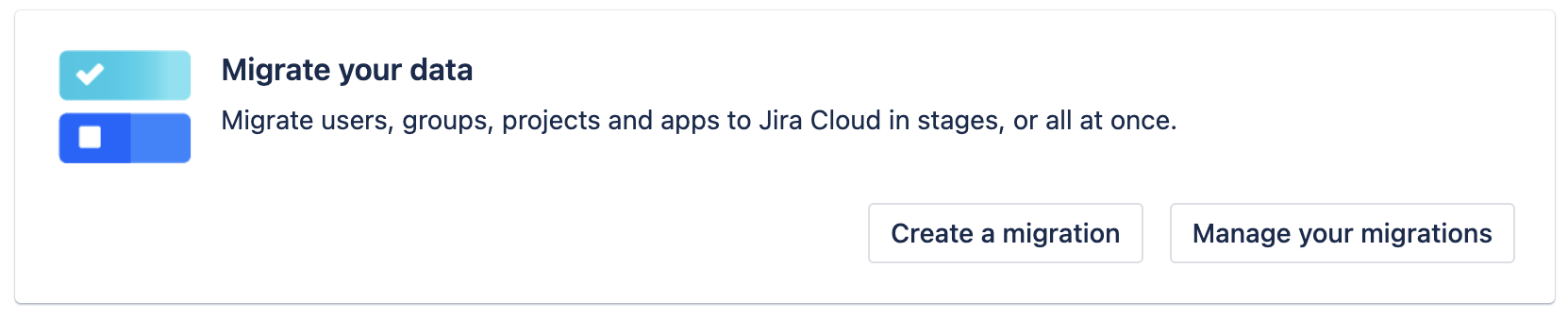
At the next step, you will see two options: Migrate users only and Migrate Jira data including users and installed apps.
[4.1] Select Migrate Jira data including users and installed apps.
Important!
If this is your first migration and no migrations have been done before, you must migrate not only app data but also standard Jira data.
[4.2] To create the first migration, click “Create a migration” and you will be redirected to the migration configuration page:
.png?cb=c1b4161f10f973fe66afa834351f2a60)
[4.3] In the first step configure:
-
enter the migration name
-
select “Production migration stage”
-
choose the Cloud site where data will be migrated
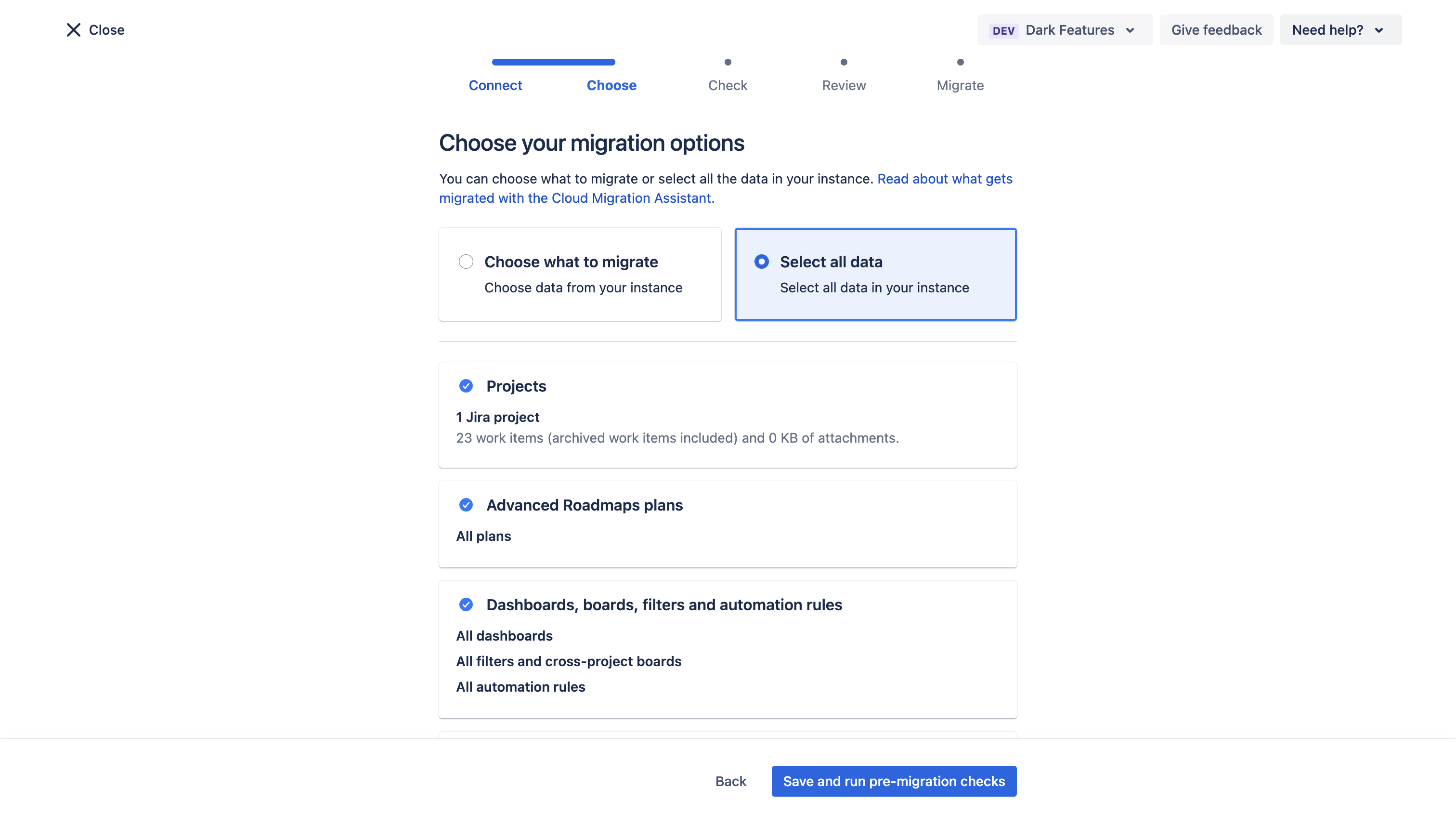
[4.4] Next, select the data you want to migrate.
-
For the first migration, you should choose “Select all data” to migrate everything at once.
Reminder
For the SLA Time and Report app to work correctly, all related Jira data must be migrated, including users, user groups, projects, custom fields, statuses, priorities, and other dependencies. Therefore, we recommend using the “Select all data” option for the initial migration.
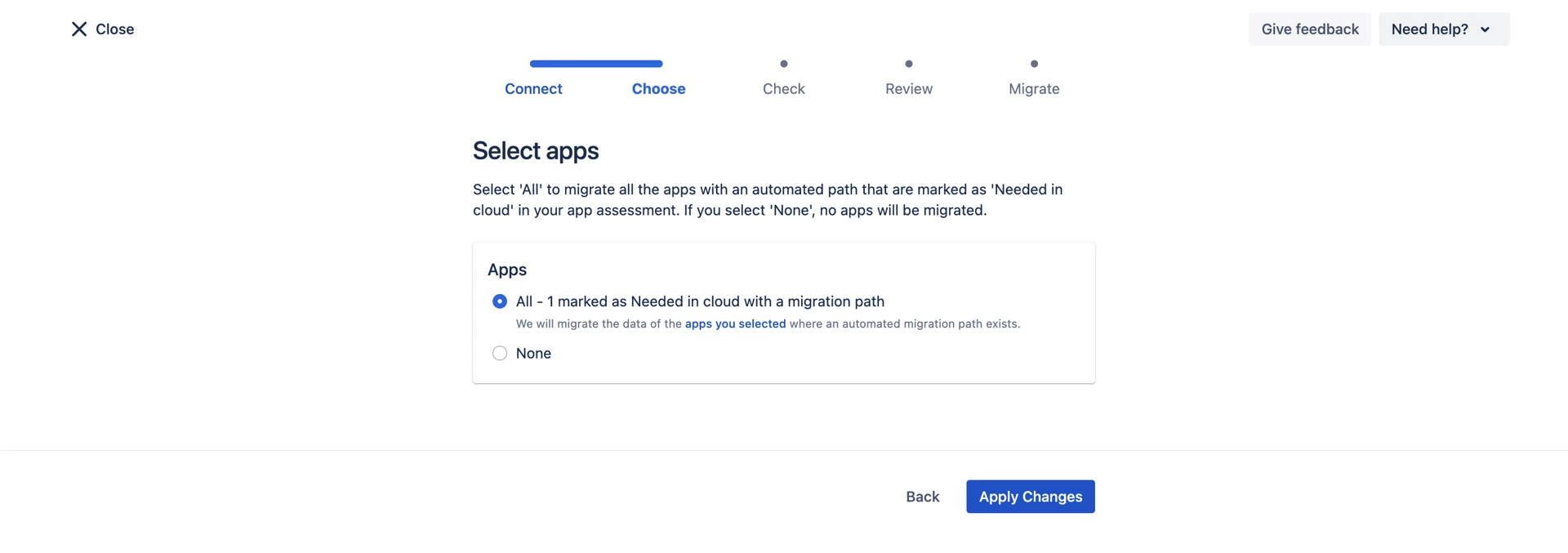
[4.5] Make sure that you have selected all required apps for migration, and then choose “All” to ensure that all apps marked as Needed in cloud with an automated migration path are included, and Click “Apply Changes”
In the next step, Pre-Migration checks will run
[4.6] If all checks pass, click “Continue and review later”
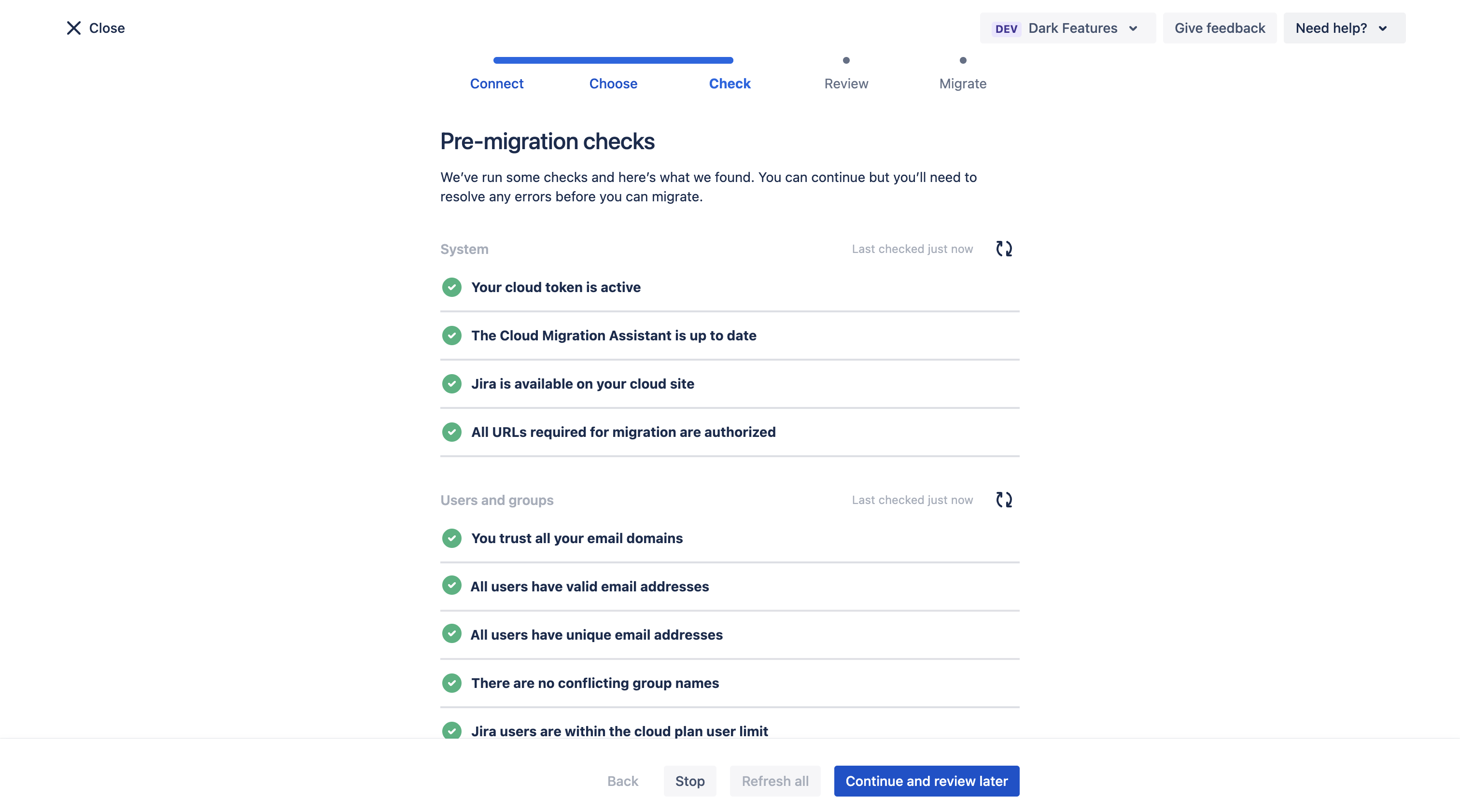
If there are errors, they must be fixed. JCMA will suggest possible solutions.
[4.7] Proceed to the final review of migration settings, then click “Run”
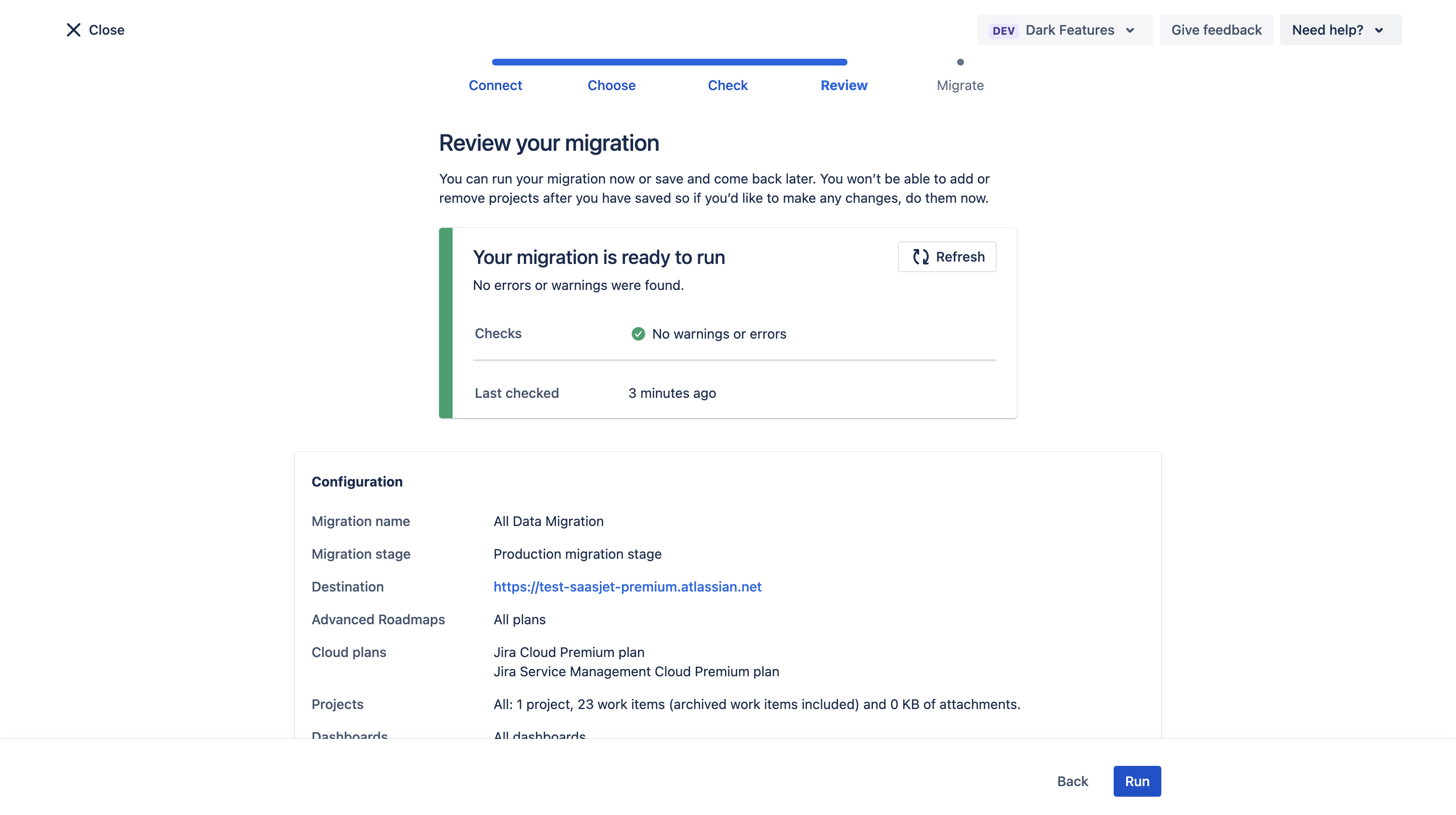
Below, you will see all entities that will be migrated, for example:
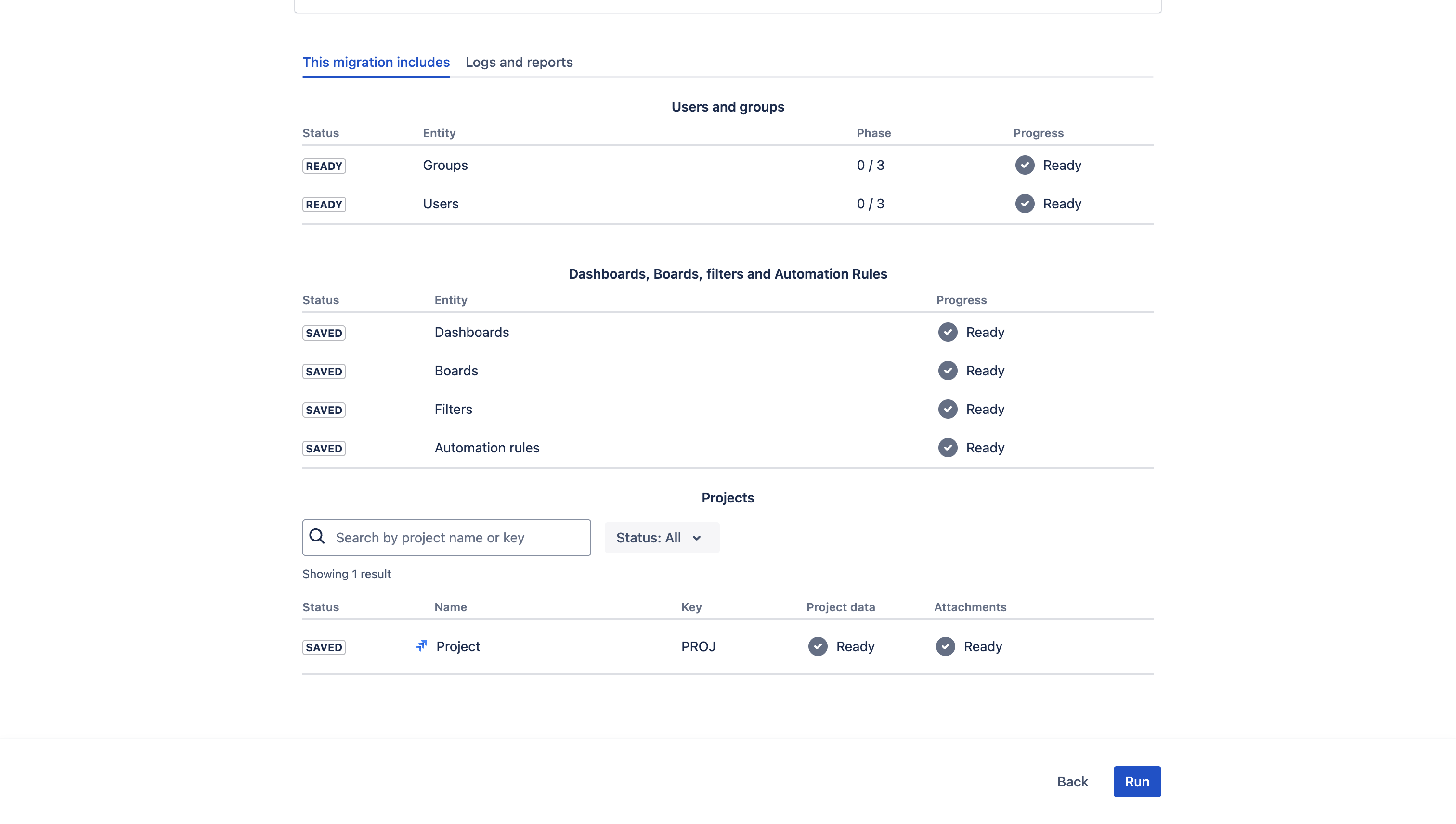
[4.9] Ensure SLA Time and Report for Jira is included:

If everything is correct, you can start the migration.
Step 4.2 - Start Migration
First, all Jira-related fields are migrated, and at the end, app data is migrated.
When migration reaches SLA Time and Report for Jira, you can monitor the process using logs and periodically download them in CSV format using the “View logs” button:
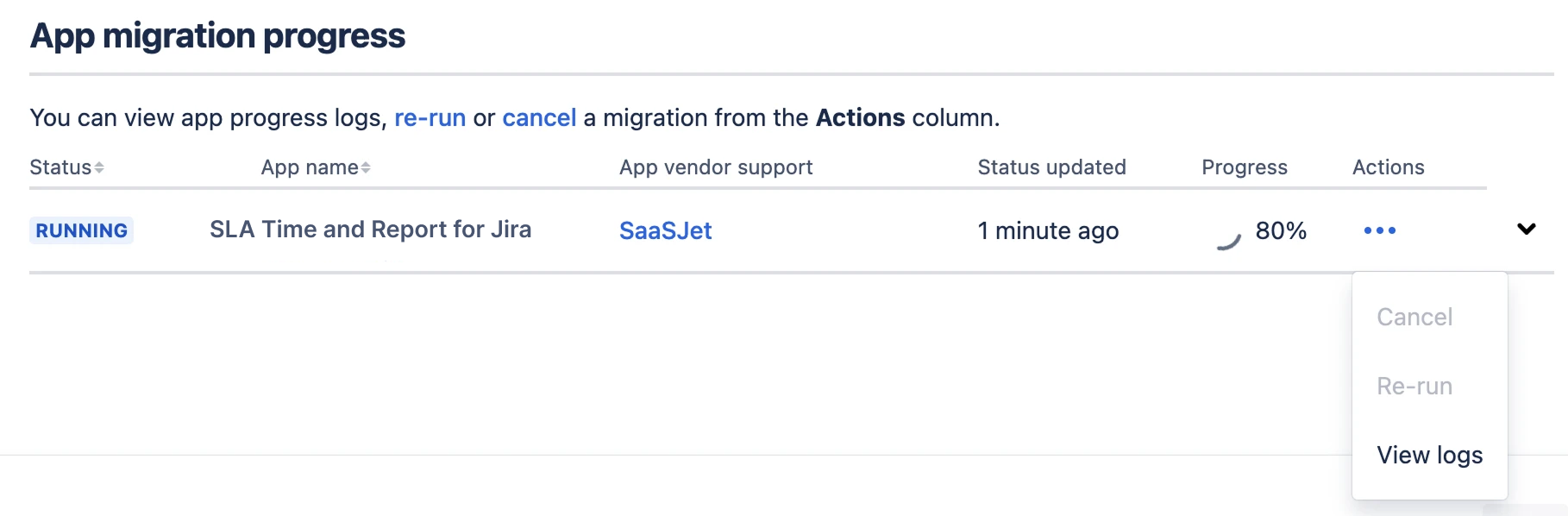
After successful migration, you will see:

After migration is complete, you need to perform validation:
-
Go to the Cloud site and check migration results
-
Review app configuration, filters, and fields
-
Test the app functionality
If you need help or want to ask questions, please contact SaaSJet Support or email us at support@saasjet.atlassian.net
Important notice
Migration results may vary depending on your instance configuration and data.
If you experience any issues or notice missing data after migration, we recommend contacting Atlassian Support.