
The Time limit based SLA type is the most commonly used SLA configuration.
It measures the time between defined Start and Stop conditions and compares it to a fixed time target.
This type of SLA is typically used to track:
-
response time
-
resolution time
-
internal process deadlines
How SLA time is calculated
Once the defined Start condition is met, the SLA timer begins. The timer continues running until the Stop condition is reached. During this time, the SLA can:
-
pause (for example, when waiting for a customer)
-
reset (if configured)
-
continue across multiple cycles (if Multi-Cycle is enabled)
The total tracked time is then compared with the defined SLA goal.
SLA conditions and goals
In a Time limit based SLA, conditions and goals work together: Conditions define when SLA time is tracked, and goals define what target should be achieved within that time.
For example:
:Start: Start condition: work item moves to In Progress
:Stop: Stop condition: work item moves to Done
-
Goal: resolve the work item within 8 hours. You can set a specific time limit for each goal (for example, 6h 30m)
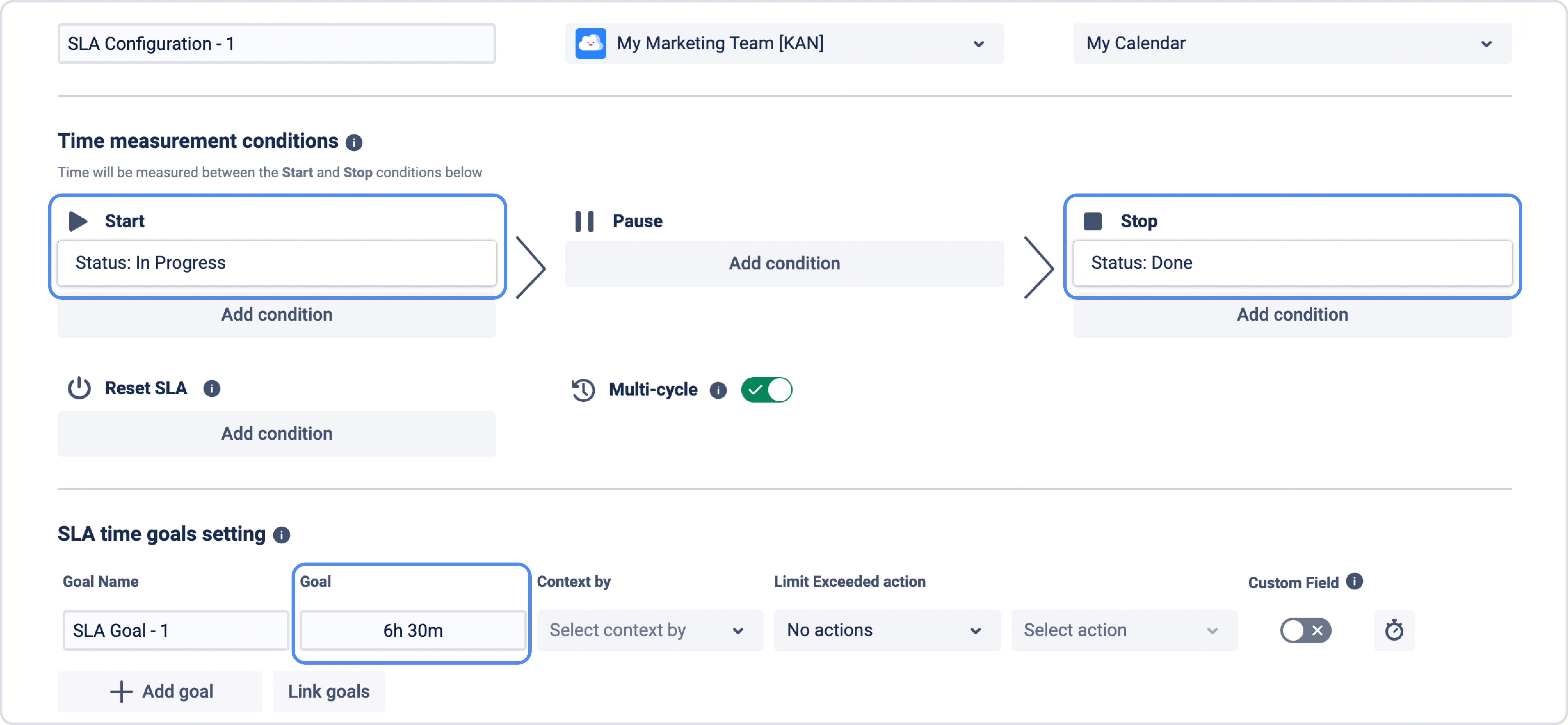
This means the system tracks the time between the selected statuses and checks whether the work item is completed within the defined target.
SLA conditions configuration
SLA conditions define when SLA time is tracked and how the timer behaves during the work item lifecycle. You can configure the following conditions:
:Start: Start condition
Defines when the SLA timer begins. The timer starts when the work item meets the selected condition (for example, when the status changes to In Progress).
:Pause: Pause condition
Temporarily stops the SLA timer. This is typically used when the work is blocked or waiting, for example, waiting for a customer response or waiting for approval.
When the work item meets the pause condition (for example, status = On Hold), the SLA timer is paused and does not count time.
:Stop: Stop condition
Defines when the SLA timer stops completely. The timer stops when the work item reaches the final state (for example, status = Done).
Additional options
:Reset: SLA Reset
Allows you to restart the SLA timer when specific conditions are met. When the reset condition is triggered, the SLA timer starts again from zero.
:Reset: Multi-cycle option
Allows the SLA to track time across multiple cycles instead of stopping after the first completion. When enabled, the system sums the time from all cycles between the start and stop conditions.
SLA goals configuration
You can define different SLA goals depending on: priority; work item type; services; other Jira or custom fields.
The Context by feature allows you to assign SLA goals based on specific fields (for example: Severity, Priority, Complexity, Assignee, etc.). This means that goals are tracked based on the chosen field context, helping you manage and evaluate SLA performance more effectively.
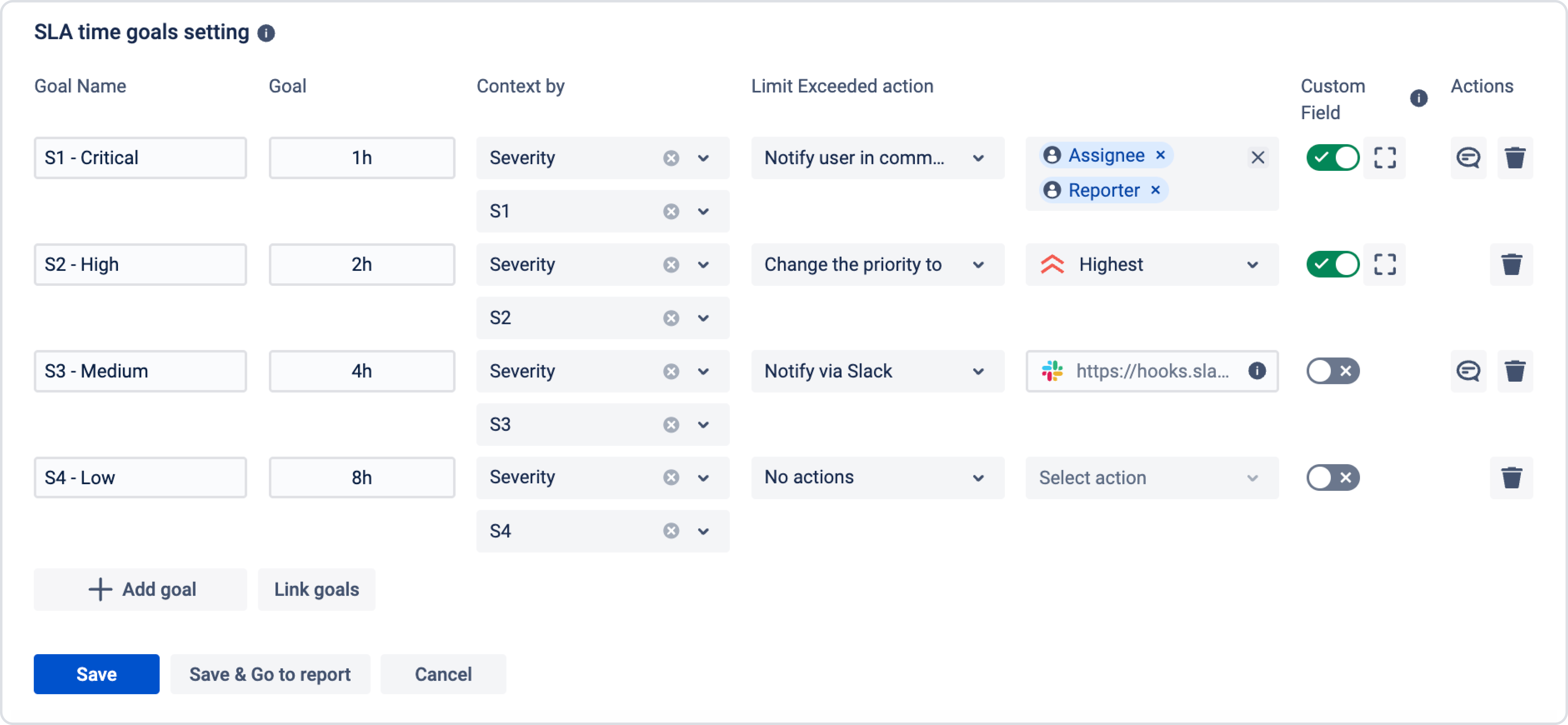
You can assign a Custom Field to each goal and configure automated actions that are triggered when the SLA is exceeded. These actions help teams react faster and prevent further SLA breaches. Available actions include: notify user in comment; change the assignee to; change the priority to; change the status to; notify via Slack.
.jpg?cb=2c961983d7a6a253aebbad0c1942830d)
Working time
1 day (1d) equals 8 hours by default and can be changed in the settings of the selected Work Schedule.
How to configure a Time limit based SLA
To use this SLA type, select it at the first step of SLA configuration.
-
Open the SLA configuration page

-
Click Add new

-
Select Time limit based SLA type
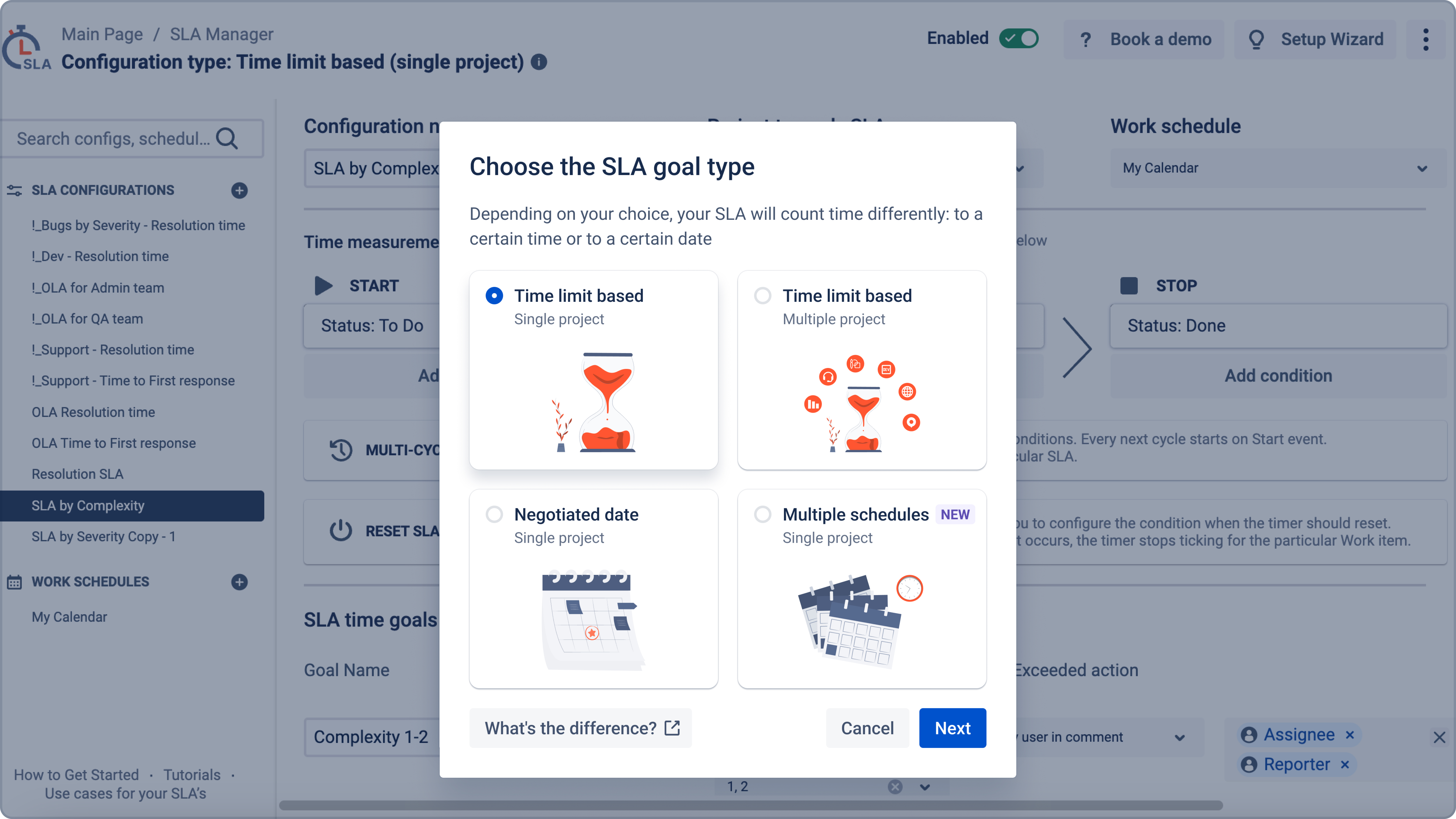
Then configure:
-
Start, Pause, and Stop conditions
-
SLA goals (time limits)
-
(Optional) Reset and Multi-cycle options
-
(Optional) Context-based rules
-
(Optional) Automated actions and notifications
-
Working schedule
Finally, click .png?cb=845046da4a3270c4104aa0a6e8566d23)
Need help?
Have questions or need help with SLA Time and Report? Contact our support team.
Want to see SLA Time and Report in action?
Book a demo with our team to explore your use case, or start a free trial to try the app in your Jira environment.